Learning kitGrades 4-5
Science: astronomy
Space investigator: the Sun, stars and beyond
Build a scale model of the Solar System, watch the night sky change as Earth circles the Sun, find bright stars and read their colors in Night Sky Lab, and use sky tools and real ones to explore. Ages 9 to 11 or grades 4 to 5.
- Time
- About 2 hours, in two sittings, plus a clear night outside
- Steps
- 5 steps, 3 of them in Night Sky Lab
- You need
- A computer, Chromebook or tablet. A clear night and a grown-up for the outdoor parts. Printing is optional: every step works on screen. No account needed.

The 5 steps
- 1Model the Solar SystemBuild itThe Solar System is so big that pictures in books squeeze it. Build a model where the distances are to scale, and see how empty space really is.
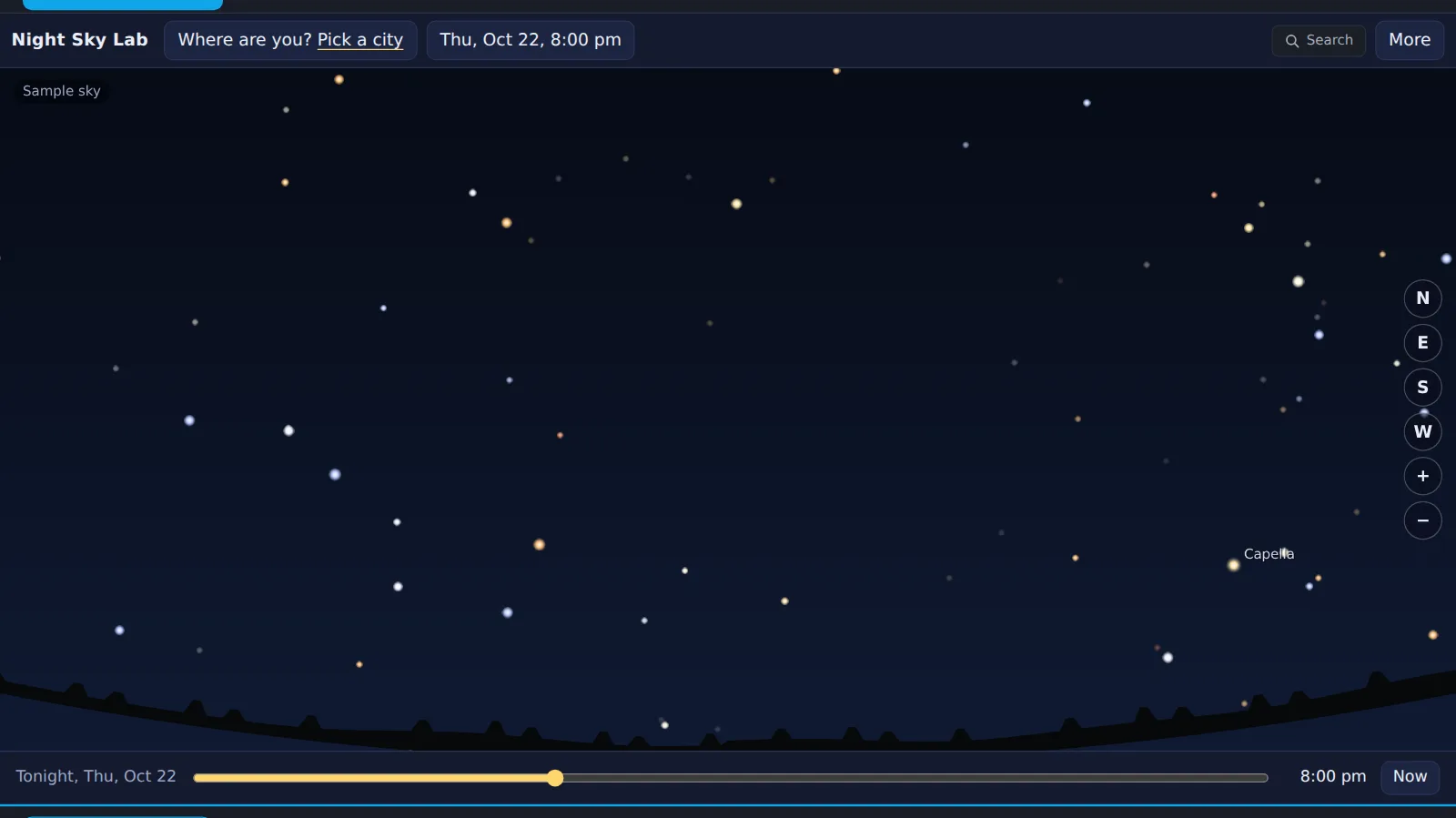
- 2Circle the SunIn Night Sky LabEarth takes a year to circle the Sun. As it moves, the night side of Earth faces different stars, so the night sky changes with the seasons. Watch it happen in Night Sky Lab.
- 3Discover the starsIn Night Sky LabStars are suns, so far away they look like dots. Find three bright ones and read what their colors say.
- 4Use the tools to explore: star mapsIn Night Sky LabAstronomers use star maps and pointer stars to find their way. Use the Big Dipper to find the North Star, the way sailors did.
- 5Use tools to explore: the real skyGo outsideNow use real tools. Binoculars, a star chart and your own eyes are enough to start.
Work on a computer. The apps need a keyboard and a bigger screen than a phone: a laptop, desktop or Chromebook. You can pay here and open the emailed link on the computer.
One learner
Unlock the kit, $5
- All 5 steps, worked on screen, with a lesson you can print if you like paper
- Night Sky Lab activities that check the work as it is done
- A numbered certificate with a page of the learner's own work: your Solar System model, your star notes and your observing plan
Have a discount code?
Co-ops and classes: unlock it for a group
One payment and one code. Each learner types the code to unlock the kit on their own computer, and gets their own certificate at the end. Your pack page shows who has started and finished.
See a sample certificate (PDF) · Already paid? Find your link